
For many families, obtaining lawful permanent residence in the United States begins with a family-based immigration petition. Whether you are filing form I-130 immigration paperwork for a spouse, parent, child, or another eligible relative, understanding sponsorship and income requirements is an essential part of the process.
One of the most common questions applicants ask is, “How can I get a green card through family sponsorship?” The answer often involves more than simply submitting forms. In most family-based immigration cases, a petitioner must also demonstrate financial ability to support the immigrant through an Affidavit of Support.
This guide explains the financial requirements for a sponsor, sponsorship obligations, and what counts as income.
What Is Form I-130 and Why Is It Important?
Form I-130 immigration petitions are used by U.S. citizens and lawful permanent residents to establish a qualifying family relationship with a foreign national relative.
The petition serves as the foundation of many family-based green card cases. Once approved, the beneficiary may move forward with the immigration process, provided all eligibility requirements are met.
Understanding the I-130 requirements is important because errors or missing documentation can delay processing and affect the overall timeline of the case.
How Can I Get a Green Card Through Family Sponsorship?
Many immigrants ask, “How can I get a green card through a family member?” While every case is unique, the process generally involves several steps.
First, the sponsoring relative submits the required petition. Once the petition is approved and a visa becomes available, the beneficiary may proceed with adjustment of status or consular processing.
In addition to proving the family relationship, the petitioner usually must act as a sponsor for green card purposes by submitting financial documentation that demonstrates the ability to support the intending immigrant.
Understanding the Affidavit of Support
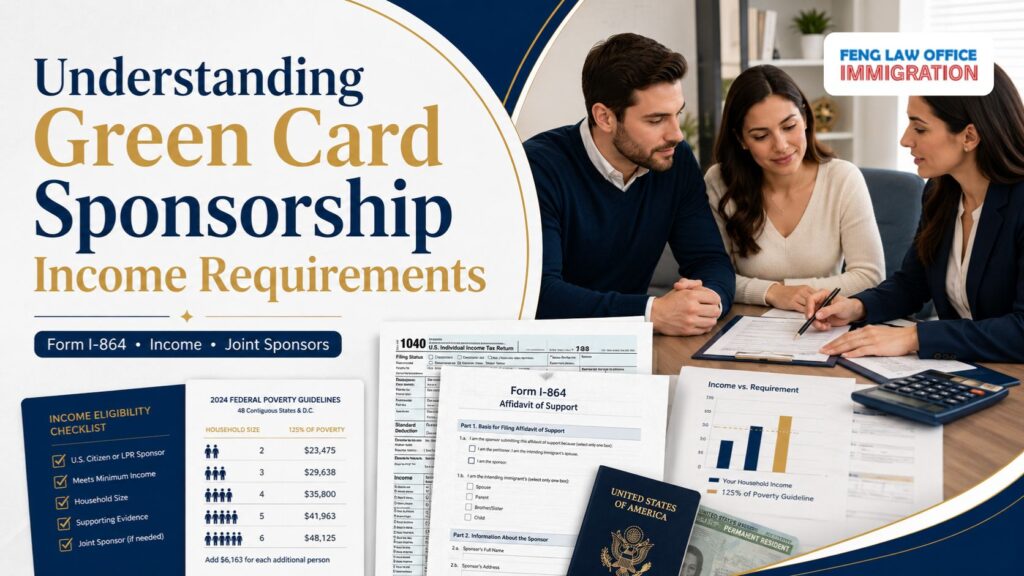
A critical part of most family-based immigration cases is Form I-864, also known as the Affidavit of Support.
The purpose of this document is to show that the immigrant is unlikely to become dependent on public assistance after arriving in the United States. The sponsor agrees to accept certain financial responsibilities and must meet specific income thresholds established by federal guidelines.
The required income affidavit of support documentation often includes tax returns, employment records, and proof of current earnings.
Income Requirement for Sponsorship Explained
One of the most important questions for petitioners concerns the income requirement for sponsorship.
Sponsors must demonstrate income that meets or exceeds a percentage of the Federal Poverty Guidelines for their household size. For most family-based immigration cases, the sponsor must demonstrate income of at least 125% of the Federal Poverty Guidelines for their household size. However, 100% of the Federal Poverty Guidelines applies if the sponsor is on active duty in the U.S. Armed Forces and is sponsoring a spouse or unmarried child under age 21.
Household size generally includes:
- The sponsor
- Dependents claimed on tax returns
- The immigrant being sponsored
The required income level changes periodically and depends on the number of people included in the household calculation.
Because immigration authorities carefully review financial eligibility, understanding the applicable income requirement for sponsorship is essential before filing.
What Counts as Affidavit of Support Income?
Many applicants are unsure which types of income can be used when completing Form I-864.
The term affidavit of support income generally refers to income that can be documented and verified through official records. Common examples include employment wages, self-employment earnings, retirement benefits, and certain other lawful sources of income.
When evaluating affidavit support income, immigration officials typically review tax records and current financial circumstances to determine whether the sponsor meets the required threshold.
Proper documentation is critical because unsupported income claims may not be accepted.
I-864 Total Income or Adjusted Gross Income?
A common source of confusion involves the question: total income or adjusted gross income?
When reviewing tax returns, sponsors often wonder which figure should be reported on Form I-864. The answer depends on the version of the tax return and the instructions applicable to the form.
Understanding total income or adjusted gross income requirements is important because reporting the incorrect figure can create delays or requests for additional evidence.
Sponsors should carefully review current USCIS instructions and ensure that the income reported on Form I-864 matches the appropriate tax documentation.
Income Sponsor Immigration Requirements
The role of an income sponsor extends beyond simply filing paperwork. Sponsors enter into a legally enforceable agreement with the U.S. government and the sponsored immigrant. This means the sponsor may remain financially responsible under certain circumstances until the immigrant achieves a qualifying immigration milestone.
For this reason, anyone serving as an income sponsor should fully understand the obligations associated with Form I-864 before signing the document.
Affidavit of Support Required Income and Joint Sponsors
Not every petitioner earns enough to satisfy the affidavit of support required income threshold. Fortunately, immigration law may allow the use of a joint sponsor in qualifying situations.
A joint sponsor agrees to independently meet the required income standard and submit a separate Affidavit of Support.
This option can help applicants move forward when the primary sponsor’s income falls below the required level.
Whether using a primary sponsor or joint sponsor, the affidavit of support required income standards remain an important part of the approval process.
Common Mistakes That Can Delay Approval
Several issues frequently cause delays in family-based immigration cases:
- Incomplete income affidavit of support documentation
- Failure to meet the required income threshold
- Incorrect household size calculations
Carefully reviewing all forms and supporting documents before submission can reduce the likelihood of delays and requests for additional evidence.
FAQs
The primary I-130 requirements include proving a qualifying family relationship, submitting supporting documentation, and filing the petition correctly with USCIS.
An affidavit of support income review helps immigration authorities determine whether the sponsor has sufficient financial resources to support the intending immigrant.
Yes. In some situations, a joint sponsor for green card applications may help satisfy financial eligibility requirements when the primary sponsor's income is insufficient.
If the sponsor cannot satisfy the income requirement for sponsorship, additional options such as household member income, assets, or a joint sponsor may be available.
Conclusion
Family-based immigration involves more than proving a qualifying relationship. Understanding immigration procedures, meeting the income requirement for sponsorship, and accurately completing the Affidavit of Support are all critical steps toward obtaining lawful permanent residence.
Whether you are researching how to get a green card, preparing financial documents, or reviewing the affidavit of support required income guidelines, taking time to understand the process can help reduce delays and improve the likelihood of a successful application. Careful preparation, accurate documentation, and compliance with current immigration requirements remain the keys to a smoother green card journey.
-
Facebook
-
Twitter
-
Pinterest
-
Linkedin
Trust us and call us today.

Zechen Feng
Zechen Feng is the founder and principal attorney at Feng Immigration Law, where he is dedicated to helping individuals and families navigate the U.S. immigration system with clarity and confidence. With extensive experience in immigration law and a personalized approach to every case, Zechen is passionate about advocating for his clients’ rights and futures. Through the blog, he shares practical guidance, legal updates, and expert insights to empower those on their immigration journey.


 ICONIER Digital Agency